The Nativity of the Saviour Gives Joy to Sound Hearts

St. Leo the Great

As yonder visible light affords pleasure to eyes that are unimpaired, so to sound hearts does the Saviour’s nativity give eternal joy.

And we must not keep silent about it, though we cannot treat of it as we ought.

For we believe that what Isaiah says, “who shall declare his generation?” (Isaiah 53:8) applies not only to that mystery, whereby the Son of God is co-eternal with the Father, but also to this birth whereby “the Word became flesh.”

The Pre-Eternal and Uncircumscribed and Almighty Word is Now Born according to the Flesh

St. Gregory Palamas

This is the Festival of the virgin birth!

[...] Today I see equality of honour between heaven and earth, and a way up for all those below to things above, matching the condescension of those on high.

However great the heaven of heavens may be, or the upper waters which form a roof over the celestial regions, or any heavenly place, state or order, they are no more marvellous or honourable than the cave, the manger, the water sprinkled on the infant and His swaddling clothes.

The Son of God Became the Son of Man in order to Make Us Sons of God

John of Kronstadt:

We are approaching…the world-saving feast of the birth in the flesh of our Lord God and Saviour, Jesus Christ.

For several days before the feast, the holy Church will celebrate this wondrous mystery in the spiritual hymns of her daily services.

These hymns remind us of our divine birthright, and the squandering of our sonship through sin; of its restoration through repentance of our common spiritual kinship and of the spirit of love and care for one another.

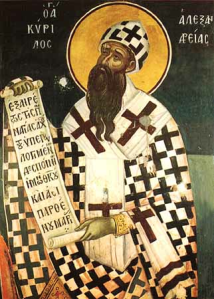
As Aaron Took His Robe, so the Word Took Earthly Flesh

Athanasius of Alexandria

Aaron was not born a high-priest….

He became so, not simply, nor as betokened by his ordinary garments, but putting over them the ephod, the breastplate, the robe, which the women wrought at God’s command.

And, going in them into the holy place, he offered the sacrifice for the people; and in them, as it were, mediated between the vision of God and the sacrifices of men.

The Incarnation and the Creation of the New Man

Hilary of Poitiers

That blessed and true birth of the flesh conceived within the Virgin the Apostle Paul has named both a creating and a making, for then there was born both the nature and form of our created being.

And without doubt in his view this name belongs to Christ’s true birth as a man, since Paul says:

But when the fulness of the time came, God sent His Son, made of a woman, made under the law, in order that He might redeem those who are under the law, that we might obtain the adoption of sons (Gal. 4:4, 5).

In the Beginning was the Word

Gregory of Nyssa

In the beginning was the Word, and the Word was with God, and the Word was God. The same was in the beginning with God (John 1:1-2).

The sublime John…, that voice of thunder which proclaims the mystery of the Theology, both names Him Son of God and purges his proclamation from every idea of passion.

For behold how in the very beginning of his Gospel he prepares our ears, how great forethought is shown by the teacher that none of his hearers should fall into low ideas on the subject, slipping by ignorance into any incongruous conceptions.

A Man is Made the Body of Christ, because Christ Also is the Body of a Man

Leo the Great

Such was the state of all mortals resulting from our first ancestors that…no one would have escaped the punishment of condemnation, had not the Word become flesh and dwelt in us, that is to say, in that nature which belonged to our blood and race.

And accordingly, the Apostle says: “As by one man’s sin (judgment passed) upon all to condemnation, so also by one man’s righteousness (it) passed upon all to justification of life.

For as by one man’s disobedience many were made sinners, so also by one man’s obedience shall many be made righteous” (Rom. 5:18, 19);

Cyril of Alexandria: We Proclaim the Holy Virgin to be the Mother of God

cyril_alexandriaBecause he was of the house and lineage of David (Luke 2:4).

The book of the sacred Gospels referring the genealogy to Joseph, who was descended from David’s house, has proved through him that the Virgin also was of the same tribe as David, inasmuch as the Divine law commanded that marriages should be confined to those of the same tribe.

And the interpreter of the heavenly doctrines, the great apostle Paul, clearly declares the truth, bearing witness that the Lord arose out of Juda.

Homily on St. Ignatius the God-bearer by St. John Chrysostom

On the holy martyr Saint Ignatius, the god-bearer, arch-bishop of Antioch the great, who was carried off to Rome, and there suffered martyrdom, and thence was conveyed back again to Antioch.

St. John Chrysostom

1. Sumptuous and splendid entertainers give frequent and constant entertainments, alike to display their own wealth, and to show good-will to their acquaintance. So also the grace of the Spirit, affording us a proof of his own power, and displaying much good-will towards the friends of God, sets before us successively and constantly the tables of the martyrs. Lately, for instance, a maiden quite young, and unmarried, the blessed martyr Pelagia, entertained us, with much joy. Today again, this blessed and noble martyr Ignatius has succeeded to her feast. The persons are different: The table is one. The wrestlings are varied: The crown is one. The contests are manifold: The prize is the same. For in the case of the heathen contests, since the tasks are bodily, men alone are, with reason, admitted. But here, since the contest is wholly concerning the soul, the lists are open to each sex, for each kind the theatre is arranged. Neither do men alone disrobe, in order that the women may not take refuge in the weakness of their nature, and seem to have a plausible excuse, nor have women only quitted themselves like men, lest the race of men be put to shame; but on this side and on that many are proclaimed conquerors, and are crowned, in order that you may learn by means of the exploits themselves that in Christ Jesus neither male nor female, Galatians 3:28 neither sex, nor weakness of body, nor age, nor any such thing could be a hindrance to those who run in the course of religion; if there be a noble readiness, and an eager mind, and a fear of God, fervent and kindling, be established in our souls. On this account both maidens and women, and men, both young and old, and slaves, and freemen, and every rank, and every age, and each sex, disrobe for those contests, and in no respect suffer harm, since they have brought a noble purpose to these wrestlings. The season then already calls us to discourse of the mighty works of this saint. But our reckoning is disturbed and confused, not knowing what to say first, what second, what third, so great a multitude of things calling for eulogy surrounds us, on every side; and we experience the same thing as if any one went into a meadow, and seeing many a rosebush and many a violet, and an abundance of lilies, and other spring flowers manifold and varied, should be in doubt what he should look at first, what second, since each of those he saw invites him to bestow his glances on itself. For we too, coming to this spiritual meadow of the mighty works of Ignatius, and beholding not the flowers of spring, but the manifold and varied fruit of the spirit in the soul of this man, are confused and in perplexity, not knowing to which we are first to give our consideration, as each of the things we see draws us away from its neighbours, and entices the eye of the soul to the sight of its own beauty. For see, he presided over the Church among us nobly, and with such carefulness as Christ desires. For that which Christ declared to be the highest standard and rule of the Episcopal office, did this man display by his deeds. For having heard Christ saying, the good shepherd lays down his life for the sheep, John 10:11 with all courage he did lay it down for the sheep.

A New Year's Eve Tale by Photios Kontoglou

Saint Basil The Great

A tale of Photios Kontoglou

(Describes a visit of St. Basil on the eve of his feast, years after his repose. Translated from the Greek original.*)
The Nativity Feast having passed, St. Basil took his staff and traversed all of the towns, in order to see who would celebrate his Feast Day with purity of heart. He passed through regions of every sort and through villages of prominence, yet regardless of where he knocked, no door opened to him, since they took him for a beggar. And he would depart embittered, for, though he needed nothing from men, he felt how much pain the heart of every impecunious person must have endured at the insensitivity that these people showed him. One day, as he was leaving such a merciless village, he went by the graveyard, where he saw that the tombs were in ruins, the headstones broken and turned topsy-turvy, and how the newly dug graves had been turned up by jackals. Saint that he was, he heard the dead speaking and saying: “During the time that we were on the earth, we labored, we were heavy-burdened, leaving behind us children and grandchildren to light just a candle, to burn a little incense on our behalf; but we behold nothing, neither a Priest to read over our heads a memorial service nor kóllyva, as though we had left behind no one.” Thus, St. Basil was once again disquieted, and he said to himself, “These villagers give aid neither to the living nor to the deceased,” departing from the cemetery and setting out alone in the midst of the freezing snow.